A growing library of Instructional Design Models articles exploring the theories, models, and principles behind effective instructional design.

Mayer's Principles of Multimedia Learning provide a research-based framework for designing instructional content that aligns with how people learn.
Gagne’s Nine Events of Instruction offer a step-by-step framework for delivering instruction that aligns with how people naturally process, apply, and retain new information.
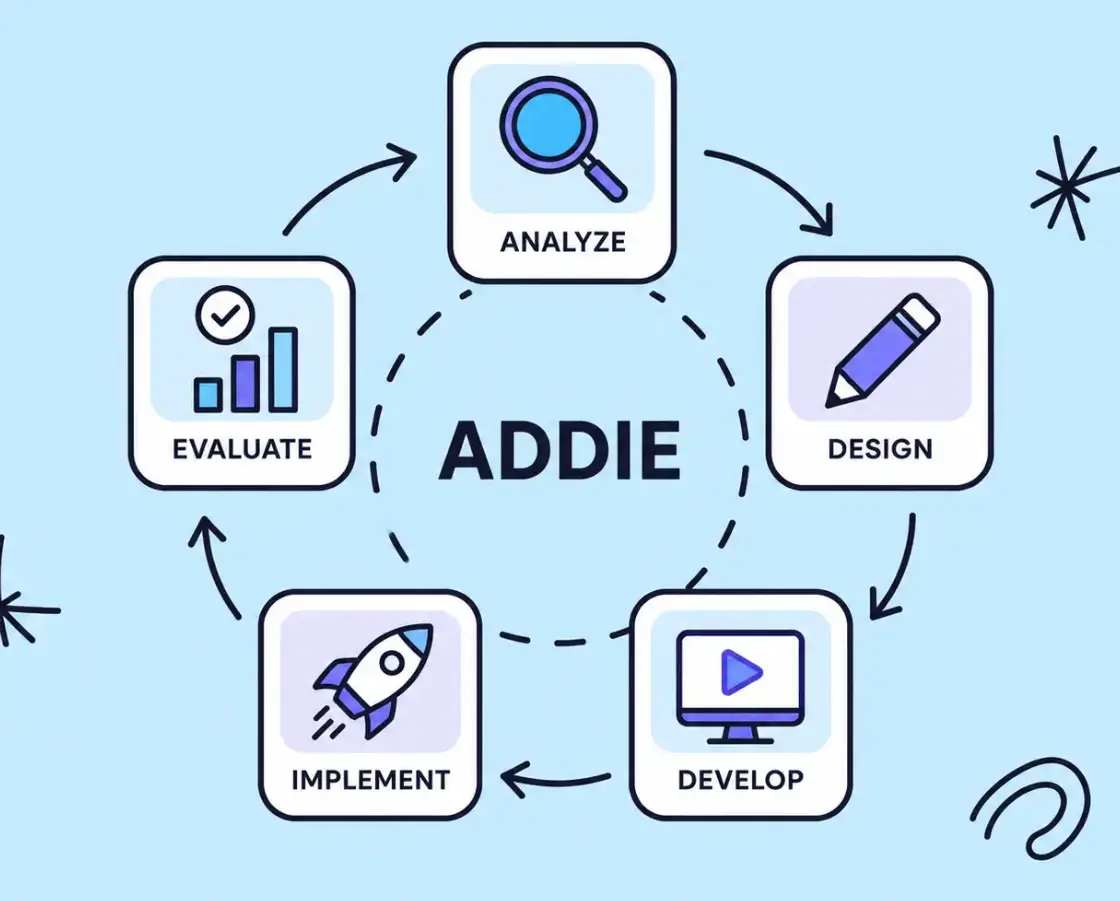
ADDIE is a core model that uses five phases—Analysis, Design, Development, Implementation, and Evaluation—to build effective, learner-focused training that improves over time.
A complete overview of Understanding by Design (UbD). Opinion on its strengths, limitations, and implications for instructional design.
Rapid Instructional Design (RID) focuses on speed and flexibility, streamlining development to deliver learning solutions quickly in fast-changing environments.
The Successive Approximation Model (SAM) is an agile, iterative framework that uses rapid prototyping and continuous feedback to create flexible, learner-centered training.
A structured instructional design framework that ensures learning materials are developed around clear, well-written, and measurable learning objectives.