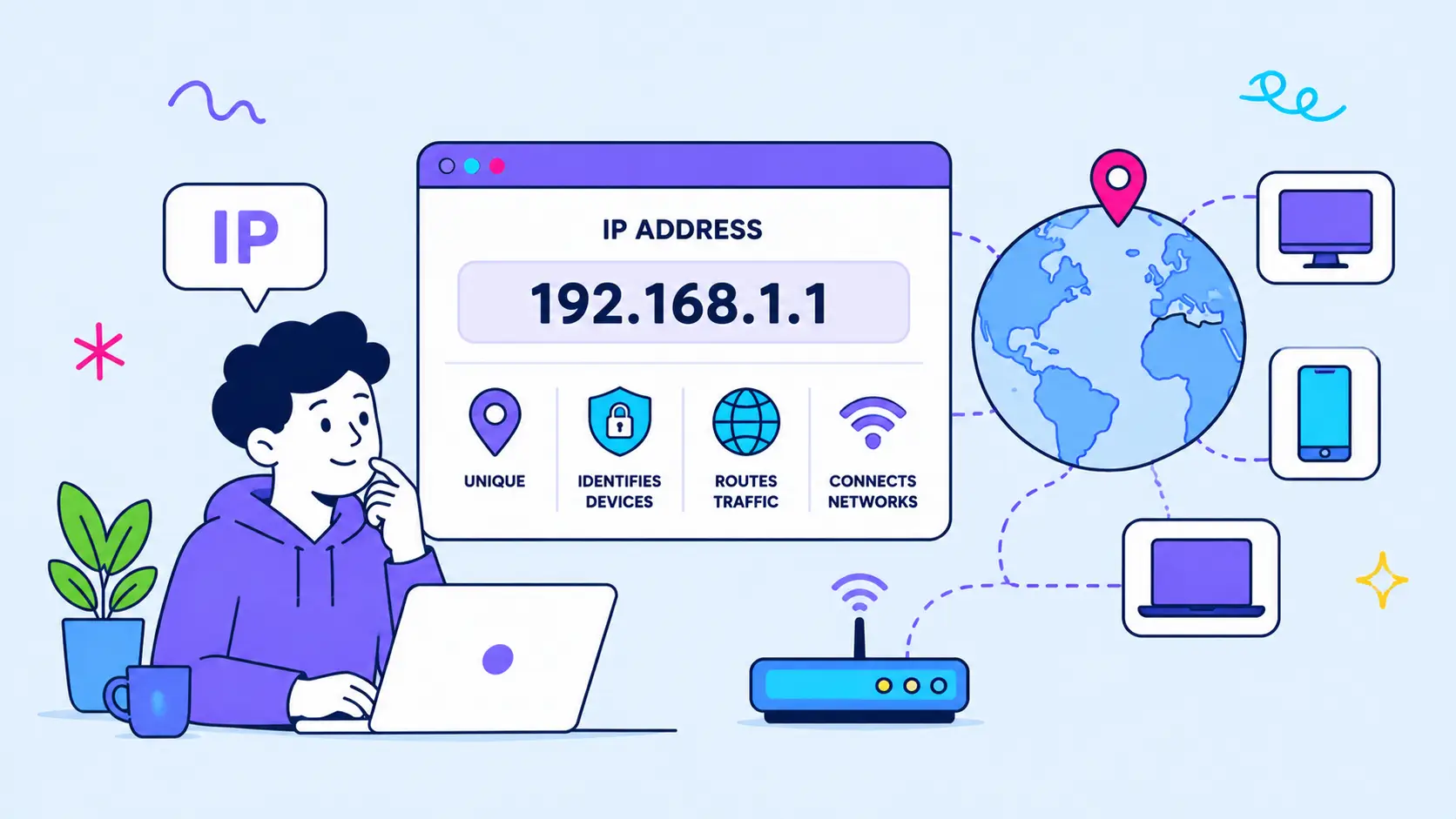
IP Addresses
Every device on the internet has an address—and that’s what keeps everything connected. This video explains what an IP address is, how it works like a digital mailing address, and why it’s one of the most important pieces behind how the internet functions. Watch to discover the hidden system that helps information travel across the web.
Video Details
Standards
Language
About this video
At the core of the internet is a set of shared rules called protocols, and one of the most important is the Internet Protocol—the system that assigns every device an IP address. This video uses a simple analogy to show how IP addresses work, comparing them to mailing addresses in the real world.
Just like a letter needs a destination and a return address, your device and the websites you visit each have their own IP address. When you click a link, your computer sends a request to the website’s IP address, and the site responds by sending the page back to yours. It’s this request-and-deliver process that allows the web to function smoothly.
The video also touches on how every internet-connected device—laptops, phones, servers—gets its IP address from an Internet Service Provider. It explains that the original version of the protocol only supported about 4 billion addresses, but as the internet grew, a newer version was created to support an almost unlimited number of connections.
By making the invisible visible, the video helps viewers understand how every online interaction depends on this essential but often overlooked technology.
Educational Standards
IP addresses are the foundation of the internet’s ability to send and receive information. Though they operate behind the scenes, understanding how they work helps learners grasp the bigger picture of how the web functions—and how devices stay connected.
You’ll be able to:
- Explain what an IP address is and why it’s needed on the internet.
- Understand how IP addresses work like digital mailing addresses.
- Describe how devices use IP addresses to request and receive data.
- Recognize that internet protocols are shared rules that enable communication.
- Understand the shift from older IP address limits to the new, expanded system.
Educational Standards
ISTE
The International Society for Technology in Education defines standards for students, educators, and leaders integrating technology into learning.
ACRL
The Association of College and Research Libraries framework identifies the core concepts and practices that define information literacy in higher education.
This video maps to the following standards.
- ISTE Standard: Empowered Learner, Indicator 1d