Ransomware
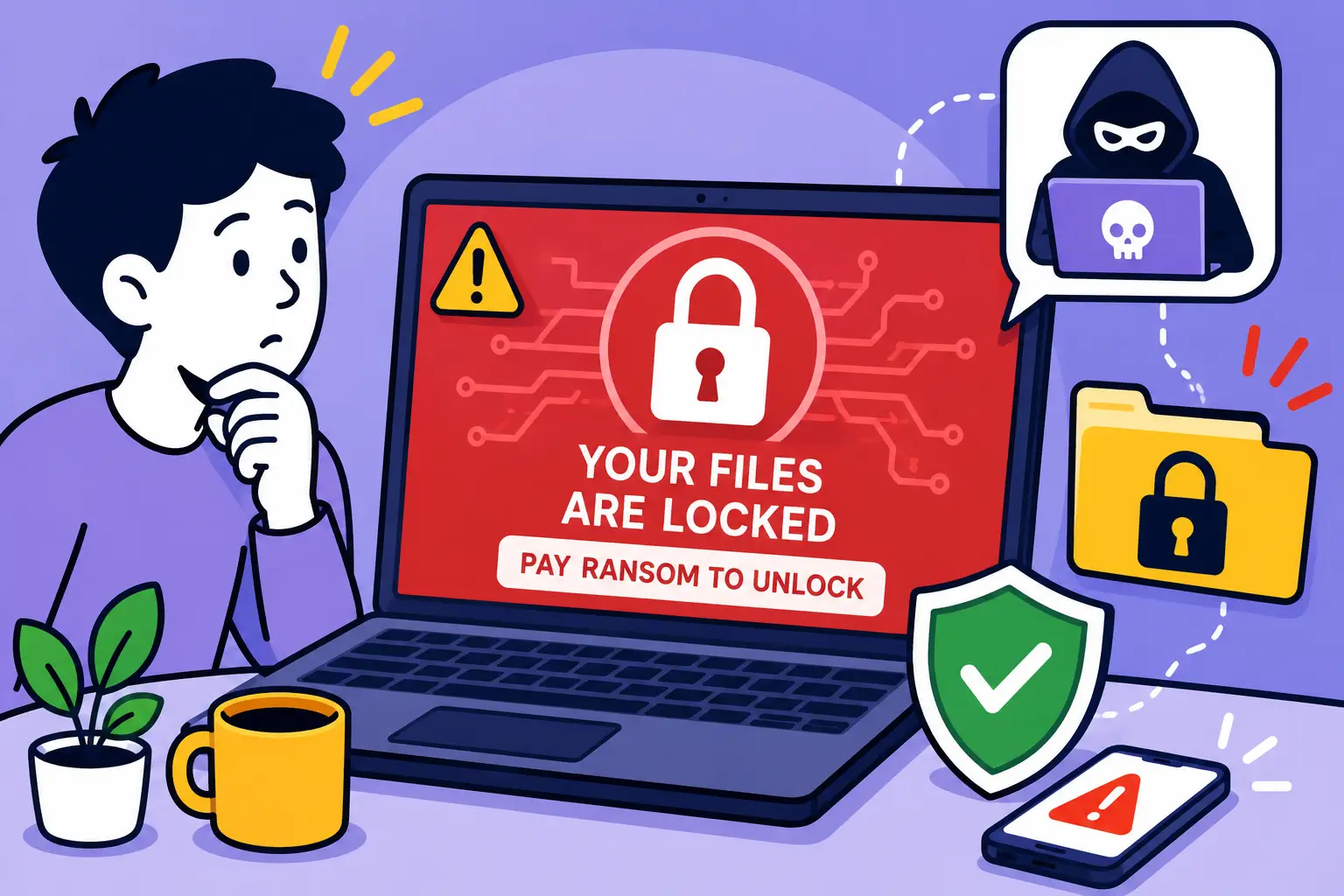
Ransomware is one of the most alarming cyber threats today. In this quick explainer, you’ll learn how criminals can lock your files and demand money to get them back—just like a digital hostage situation. We’ll show you how ransomware works, how it spreads, and what steps you can take to protect yourself and your data before it's too late.
Video Details
Standards
Language
About this video
Ransomware is exactly what it sounds like: a digital ransom. Just like a kidnapper holds someone hostage for money, ransomware locks your computer or files and demands payment for their release.
This video walks you through how these attacks usually happen. Most begin when someone clicks a suspicious email attachment or a dangerous link. Once clicked, a hidden program runs, locks your files, and displays a ransom message demanding untraceable payment—often through cryptocurrency like Bitcoin.
You’ll also learn how criminals use tricks like fake emails or pop-ups that look trustworthy to trick you into clicking. And in some cases, no clicking is needed at all—ransomware can sneak in through security holes in your system or network.
But there’s good news. Ransomware can often be avoided by keeping software up to date, being careful with email attachments, and using antivirus protection. The most important backup plan? Literally backing up your files—so if you’re hit, you won’t lose everything.
Educational Standards
Ransomware attacks are growing, and anyone using a computer or mobile device could become a target. This video helps learners understand how these attacks happen and offers clear, practical steps to avoid them. It empowers people to take control of their digital safety before it's too late.
By the end of this video, you’ll be able to:
- Explain what a ransomware attack is and why it happens.
- Identify common ways ransomware can infect your computer.
- Understand how criminals demand and receive payment.
- Recognize suspicious files, emails, and links.
- Take preventative steps like updating software and backing up files.
Educational Standards
ISTE
The International Society for Technology in Education defines standards for students, educators, and leaders integrating technology into learning.
ACRL
The Association of College and Research Libraries framework identifies the core concepts and practices that define information literacy in higher education.
This video maps to the following standards.
- ISTE Standard: Digital Citizen, Indicator 2b